

I am writing this article shortly after attending "Leaders Connect Vietnam - Navigating Tomorrow", held in Hanoi on 6 October 2026, an event organised by Google and Navagis. During the event, conversations among business leaders repeatedly returned to a common question: “Which AI tool should we use?”
This was not an isolated concern or a question raised by one individual. It reflected a broader trend among businesses as they navigate the rapid development of AI and consider how to turn new technological possibilities into practical business value.
The question is reasonable, but it may not be the most important one. Before choosing an AI solution, businesses need to step back and examine their business challenges, current processes, and the problems that truly need to be solved.
Before choosing a tool, businesses should ask:
"What should we do first?"
This question marks the starting point of a different approach to AI: beginning with the business problem, not with the technology.
vs.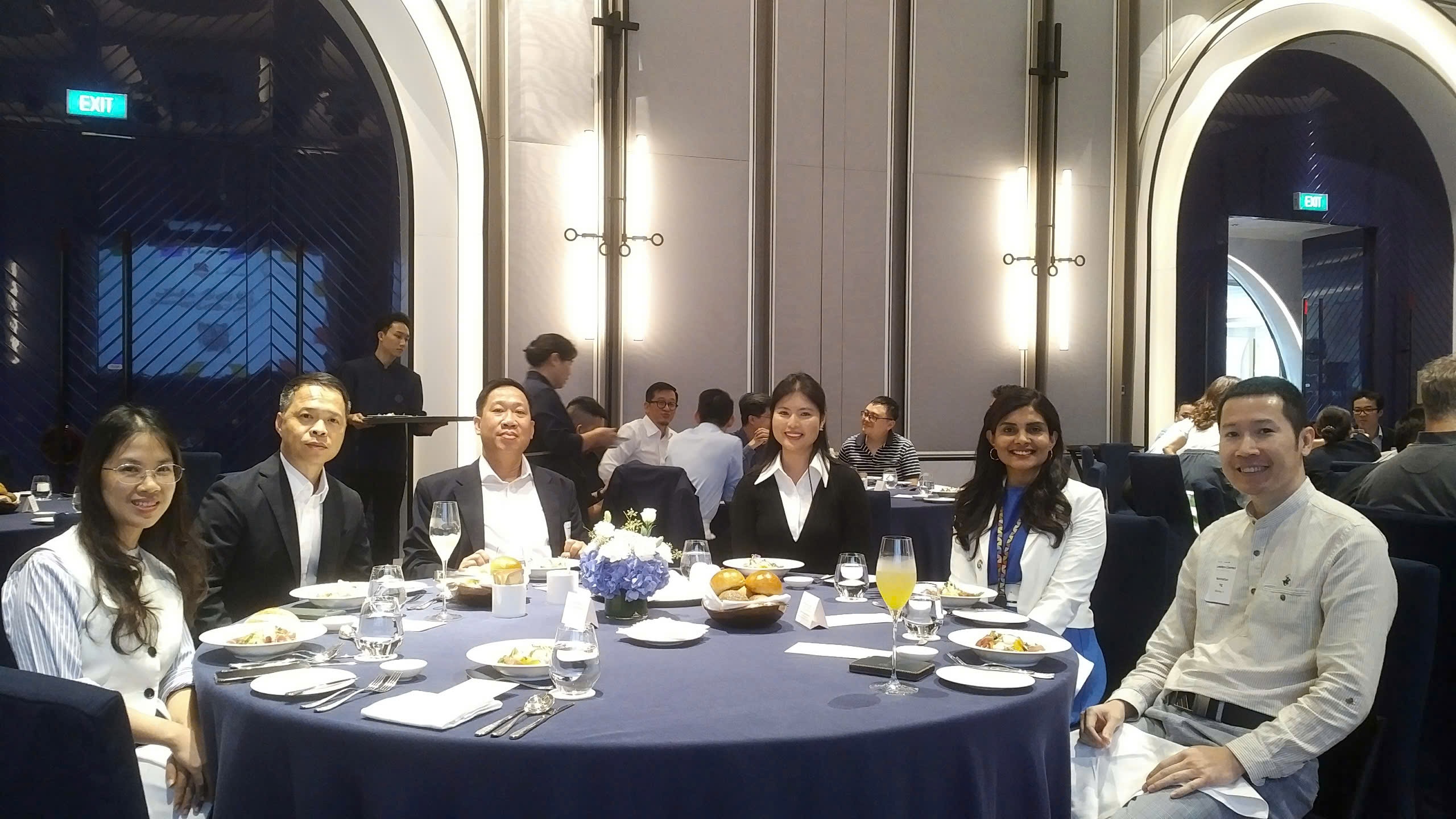
From right to left: Manhattan Ng̃, Strategy Lead, Money X; Anjusha Sandeep, Principal Architect, APAC Google Maps Platform; Representatives of TC Group; and Cuong Truong, Field Sales Representative, Google Cloud.
Too Many Tools, Too Little Direction
The market now offers many options: AI assistants, chatbots, process automation, knowledge search, data analytics, and workflows capable of coordinating multiple steps.
Each option can be useful in a particular context. However, no solution is suitable for every business, every process, or every stage of development.
Start-ups and SMEs always operate with limited resources. Data may be fragmented. Systems may not yet be ready for integration. Teams may not have enough time to change their processes. Even a good tool may fail to deliver results if it is applied to the wrong problem.
Therefore, the right question is not "What can AI do?", but:
"Which problem in the business deserves to be solved first?"
An Upside-Down World Map
On the Money X website, you will find an upside-down world map. It is not a design mistake, nor is it merely a decorative detail.
The map is a reminder of how we see the world. North does not have to be at the top of a map; that is simply a convention that has become familiar. When the map is turned upside down, the world does not change, but the observer's perspective does.
Business also contains "conventions" that are repeated so often that we stop questioning them:
- To apply AI, we must start with a chatbot.
- To modernise, we must automate as much as possible.
- To grow, we must buy the latest technology.
- To compete, we must imitate leading businesses.
These assumptions may sometimes be valid. But they are not universal truths that apply to every business.
The Money X approach is to reconsider familiar assumptions, understand the context, and choose a direction that better fits the actual goals and resources of the business.
WHY: Why Start by Asking "What Should We Do?"
Money X was founded on the belief that high-quality strategic thinking and execution capabilities should not be available only to large corporations.
Start-ups and SMEs need access to strategy, data, technology, and expertise in a lean, practical way that is appropriate to their stage of development.
This is especially important when it comes to AI. Technology can open up many possibilities, but those possibilities only become valuable when connected to a specific business problem, a real process, and a clear way to measure results.
AI should therefore not be treated as an end in itself. AI is a means to improve decision quality, productivity, costs, service quality, or growth capabilities.
HOW: See Clearly Before Investing
A responsible approach to AI usually begins with a set of practical questions:
- What does the business want to improve in the next 90 days?
- Which processes are consuming too much time or creating too many errors?
- How is the current state being measured?
- Where is the required data located?
- Who is responsible for the process and its results?
- What could happen if the AI system makes a mistake?
- Which metrics will define success?
These questions allow businesses to evaluate AI opportunities across several dimensions: business impact, feasibility, data readiness, integration capability, user acceptance, risk, and time to value.
This is the Money X approach: Lean, Smart, Exponential.
- Lean: Focus on what is essential and avoid scattered investment.
- Smart: Make decisions based on context, data, and practical understanding.
- Exponential: Build capabilities that can scale after value has been validated.
What Is AOR?
AOR, short for AI Opportunity and Readiness, is an approach that helps businesses clarify AI opportunities and assess their readiness before making larger investments.
AOR is not intended to produce a list of technologies. Its purpose is to help businesses identify:
- Which use cases have the potential to create value.
- Which use cases should not be implemented yet.
- How ready the data, systems, and people are.
- How an experiment should be designed.
- Which KPIs should be used to measure the results.
A valuable AOR does more than describe the current state. It helps a business move from a vague intention - "we should use AI" - to a more specific direction - "this is the problem we should address first, this is how we will validate it, and these are the conditions for moving forward".
It Is Not About Doing More, but Choosing Better
Imagine two businesses that both want to apply AI.
The first business begins by purchasing a tool. It then tries to find a process where the tool can be applied. After some time, users do not use it regularly, the data is not clean enough, the process contains too many exceptions, and no one knows how success should be measured.
The second business begins by identifying a workflow that is creating costs, delays, or errors. It measures the current state, assigns an owner, limits the scope, and runs a controlled experiment.
If the experiment creates value, the business scales it. If it does not meet expectations, the business adjusts or stops early.
The difference does not necessarily lie in which business has better technology. It lies in which business asked the right question before investing.
From the Map to the Next Step
Money X believes that a good solution does not begin with a ready-made formula. It begins by understanding the context, identifying the right problem, and reconsidering the assumptions that shape a decision.
AOR turns this mindset into action:
- Re-examine the current business problem and process.
- Identify opportunities with practical impact.
- Assess the data, people, systems, and risks.
- Choose a small enough experiment to validate the opportunity.
- Scale only when the results demonstrate suitable value, quality, adoption, risk control, and economics.
Before asking what AI can do, ask what the business should do.
That is not a way to delay innovation. It is a way to turn innovation into a more responsible decision.
Reconsider the map. Choose the right direction. Validate through action.
Money X ‣ Lean · Smart · Exponential